Overview
Roman metal roof tiles are a type of roofing material designed to replicate the appearance of traditional clay or concrete roof tiles commonly found in Mediterranean and Roman architectural styles. However, Roman metal roof tiles are made from metal, typically steel or aluminum, offering the benefits of durability, lightweight construction, and ease of installation. Here are some key details about Roman metal roof tiles:
1. Design and Appearance:
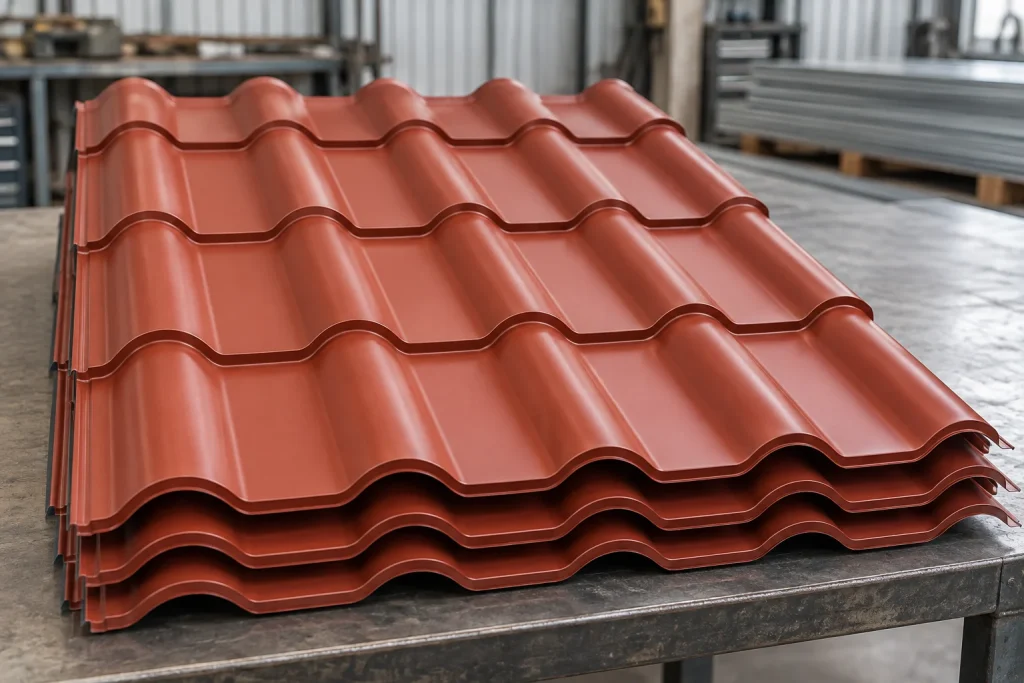
- Shape and profile: Roman metal roof tiles are typically curved and have a distinctive S-shape profile. They feature raised ribs or ridges that mimic the appearance of traditional clay or concrete tiles.
- Color and finish: These roof tiles are available in various colors and finishes, including natural metallic finishes, as well as coated or painted options that resemble traditional tile colors, such as terracotta, red, brown, or gray.
2. Material Properties:
- Durability: Roman metal roof tiles are known for their exceptional durability. They are resistant to extreme weather conditions, including wind, rain, hail, and UV radiation.
- Lightweight: Metal roof tiles are significantly lighter than traditional clay or concrete tiles, reducing the overall weight load on the roof structure and making them easier to handle and install.
- Fire resistance: Metal roof tiles offer excellent fire resistance, providing an added layer of protection for the building.
3. Benefits:
- Longevity: Metal roof tiles have a long lifespan and can last 50 years or more with proper installation and maintenance.
- Energy efficiency: Metal roof tiles can contribute to improved energy efficiency by reflecting solar heat, reducing cooling costs during hot weather.
- Low maintenance: Metal roof tiles require minimal maintenance, as they are resistant to fading, cracking, warping, and pests.
- Installation: Roman metal roof tiles are designed for ease of installation. They typically interlock or overlap with adjacent tiles, creating a secure and watertight roof covering.
- Sustainability: Metal roof tiles are recyclable at the end of their lifespan, making them an environmentally friendly roofing option.
4. Installation Considerations:
- Substrate: Proper installation of Roman metal roof tiles requires a solid and stable substrate, such as a roof deck made of plywood or metal, to provide a secure base.
- Flashing and underlayment: Flashing, such as metal strips or sheets, is installed at roof intersections and penetrations to ensure water resistance. An appropriate underlayment is used for added protection against moisture.
- Fastening: Metal roof tiles are typically fastened to the roof structure using screws or clips, providing a secure attachment while allowing for thermal expansion and contraction.
Roman metal roof tiles offer a blend of aesthetics, durability, and ease of installation. They provide a classic, Mediterranean-inspired look while benefiting from the advantages of metal roofing, including longevity, lightweight construction, and low maintenance. These roof tiles are a popular choice for those seeking a traditional tile appearance with the added advantages of metal roofing materials.