About this service
CNC cutting, also known as Computer Numerical Control cutting, is a highly automated and precise cutting process commonly used in metal factories for the fabrication of various metal components and parts. It involves the use of computer-controlled machines equipped with cutting tools to accurately cut and shape metal sheets or other metal materials. Here are some key details about CNC cutting for metal factories:
1. Process Overview:
- CAD/CAM software: The cutting process begins with the creation of a digital design or model using Computer-Aided Design (CAD) software. The design is then converted into machine instructions using Computer-Aided Manufacturing (CAM) software.
- Machine setup: The CNC cutting machine, such as a laser cutter, plasma cutter, or waterjet cutter, is prepared for operation. This involves loading the appropriate cutting tool, setting up workholding fixtures, and calibrating the machine.
- Material preparation: Metal sheets or other metal materials are prepared by positioning and securing them on the machine's worktable or bed.
- CNC cutting operation: The machine follows the programmed instructions from the CAM software, precisely controlling the cutting tool's movement to cut through the metal material based on the desired design or shape.
- Quality control: After the cutting process is completed, the cut pieces are inspected for accuracy and quality.
2. Cutting Methods:
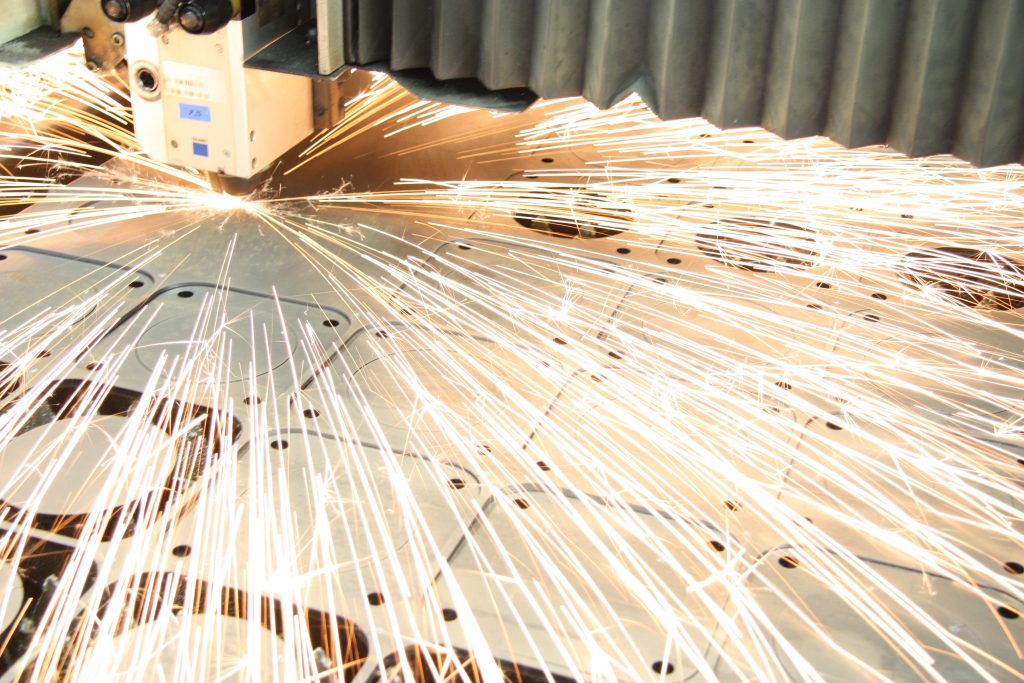
- Laser cutting: Laser cutting employs a high-powered laser beam to melt, burn, or vaporize the metal material, resulting in precise and clean cuts.
- Plasma cutting: Plasma cutting uses a jet of ionized gas, or plasma, to heat and melt the metal, while a high-velocity gas stream blows away the molten metal, producing cuts with high speed and accuracy.
- Waterjet cutting: Waterjet cutting utilizes a high-pressure stream of water mixed with abrasive particles to erode and cut through the metal material, offering versatility and the ability to cut various thicknesses and materials.
3. Advantages of CNC Cutting:
- Precision and accuracy: CNC cutting machines are highly precise and capable of consistently achieving intricate and complex cuts with tight tolerances.
- Efficiency and productivity: CNC cutting eliminates the need for manual cutting and significantly reduces production time, leading to increased productivity and throughput.
- Versatility: CNC cutting machines can handle a wide range of metal materials, thicknesses, and shapes, allowing for flexibility in manufacturing different components.
- Repetitive accuracy: CNC cutting machines can repeat cutting operations with high accuracy, ensuring consistency and uniformity in mass production.
- Waste reduction: CNC cutting optimizes material usage by minimizing waste through efficient nesting and part placement, reducing material costs.
4. Applications:
- Metal fabrication: CNC cutting is widely used in metal factories for cutting and shaping metal components used in various industries, including automotive, aerospace, construction, and machinery manufacturing.
- Prototyping: CNC cutting enables the rapid production of prototypes, allowing designers and engineers to test and validate designs before proceeding with full-scale production.
- Customization: CNC cutting machines facilitate the customization of metal parts, allowing for tailored designs and specifications to meet specific customer requirements.
CNC cutting is a highly precise and efficient cutting method used in metal factories to achieve accurate and intricate cuts in metal materials. It offers numerous advantages in terms of precision, productivity, versatility, and waste reduction, making it a valuable technology for metal fabrication processes.